
Imitating Christ
'Imitate me, just as I also imitate Christ.' (1 Corinthians 11:1)

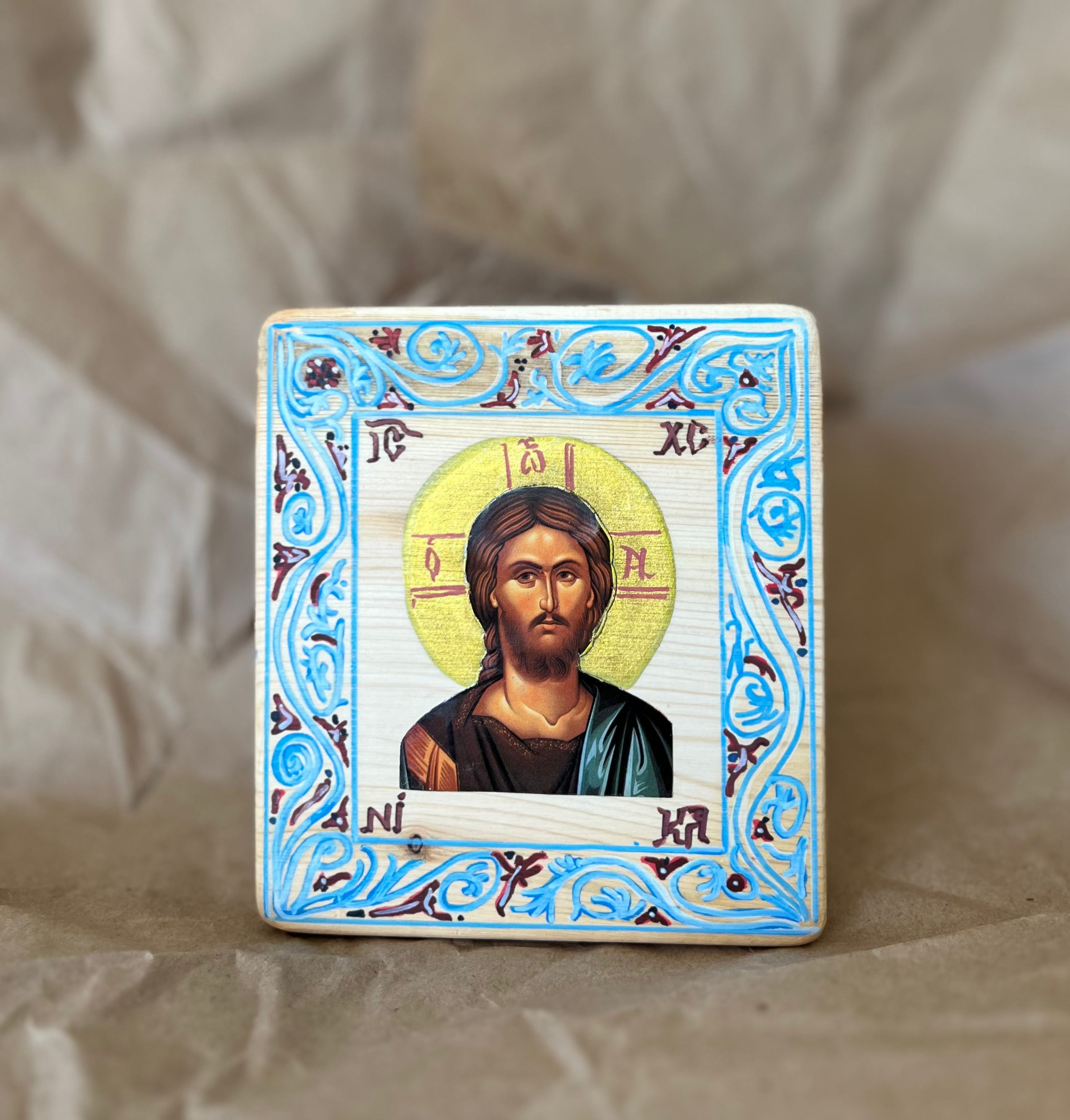
According to the early Church writings, as Jesus exists both outside and inside of time, everything He accomplished in the flesh has an eternal bearing. This means that every single thing that Jesus lived in His incarnation has salvific value and is for the inheritance of the human being. As such, the Christian life is not one of passive reception, but active imitation. Jesus is the Way, which means that we must walk in His footsteps:
“For to this you were called, because Christ also suffered for us, leaving us an example, that you should follow His steps” (1 Peter 2:21).
Many of the third and fourth century Fathers write that Jesus could have been born and immediately died as a ransom for humanity. Why did He remain on earth for thirty-three years? Because the salvation He won for us restores human life in all its fullness. He is so compassionate and zealous for His creatures that He desired to leave us His every word and deed in order to be instructed by it, inherit it, and live it out. Jesus is the living example, the Prototype, and we are the image-bearers, grafted into Him, made bone of His bone and flesh of His flesh.
The saints through the centuries knew that they were grafted into Christ. Everything that relates to Christ in His incarnation also applies to us—each one, personally, in his or her own idiom. The Scriptures, therefore, apply to us personally. Every word has multiple layers and meanings, and one of them applies to the soul. That is why we find examples like St Seraphim who tried to live out the Gospels every day, naming his forest dwelling after Gospel locations, reading all four Gospels every week, and generally imbibing Scripture like water. That is why the anonymous pilgrim in The Way of the Pilgrim held the Philokalia in one hand and the Bible in the other as his only possessions. The saints yearned to be intimately united with Christ, and they knew that the deep absorption of Scripture is the key to imitating Christ.
This imitation applies to every aspect of Christ’s earthly life, including His eighteen hidden years between the age of twelve and thirty, of which nothing is reported in the Scriptures. All that we can surmise about these years from the Gospels is that Jesus was living in his impoverished village of Nazareth, was working alongside Righteous Joseph as a carpenter, was reading the Scriptures, and was attending the Jewish feasts. From the Father’s words to Jesus at His baptism in the Jordan, we know that in these years He was a delight to His Father, and was therefore in constant union with His Father. Eighteen hidden years of living in poverty, simplicity, and obedience, compared to just three years in ministry before His Passion.
These eighteen, hidden years were crucial preparation for His ministry, and they demonstrate to us Christians that every ministry, if it is to have lasting value, requires deep preparation. This is exemplified also in the life of St John the Baptist, Apostle Paul, and many, many of the lives of the saints. But these eighteen, hidden years also reveal to us a deeper mystery: The Kingdom of God does not consist in impressive deeds, but in living every moment, word, and deed in union with God. In His daily, repetitive, and probably very tiring manual labor, the atmosphere around Jesus in His home must have been heavenly, as He was doing everything in unity with His Father. In His respectful and loving interactions with His mother, there must have been many angels in their home. He probably had to deal with many of His neighbors belittling Him or even exploiting Him in His labor, but never had the urge to justify Himself or put them in their place by telling them that He is in fact the Lamb of God who takes away the sin of the world.
In these eighteen, hidden years, Christians can rest assured that, so long as they persevere faithfully in their jobs, in their family life, or in whatever life circumstance they are in, nothing they live is in vain, but everything has an eternal value.
‘The Kingdom of God is not eating and drinking, but righteousness and peace and joy in the Holy Spirit.’ (Romans 14:17)
‘And though I bestow all my goods to feed the poor, and though I give my body [a]to be burned, but have not love, it profits me nothing.’ (1 Corinthians 13:3)
One of the primary ways that we can unite with Christ’s life is in the recitation of the Psalms. We know that Jesus in His earthly sojourn was familiar with the Psalms by His frequent quotation of them. He was likely reciting them daily, as was Jewish custom at that time, and as is suggested in Acts 3:1 and 10:9. This custom was handed down to the first apostolic Christians, and was zealously revived by the desert fathers, many of whom recited all 150 Psalms daily.
In his Letter to Marcellinus, St Athanasius says that, although the Psalms precede Christ’s incarnation, they contain the mystery of His life. Therefore, the one who recites the Psalms regularly is able to internalise Christ’s life and begin to have an open insight into how to follow closely in His footsteps. By imbibing the Psalms with a heart reaching to God, the fallen mind is refashioned into the ‘mind of Christ’ (1 Corinthians 2:16). St Athanasius says that even the outer act of singing the Psalms harmonises the inner faculties, calming the mind down, fortifying the heart with faith and love, and granting spiritual discernment which thoughts to cultivate and which to ignore.
By imbibing Scripture, especially the Psalms, we internalise Christ’s life and are better able to cling to Him in every waking moment.
'although the Psalms precede Christ’s incarnation, they contain the mystery of His life'....so incredible. Thank you for sharing this Sister, it has been such an uplifting read
This was so enlightening! I will call it a very revealing moment! In 1973, I was stationed in Biloxi MS beginning a tour in the USAF. My parents sent me a birthday gift of a New Testament and the Psalms. I now know why. Thank you.